Demands send themselves
Interest calculates itself
Receipts print instantly
Collections update live
Set the plan once, It runs itself
No typing demands one by one. No working out interest on a calculator. No chasing by hand.
Step 1
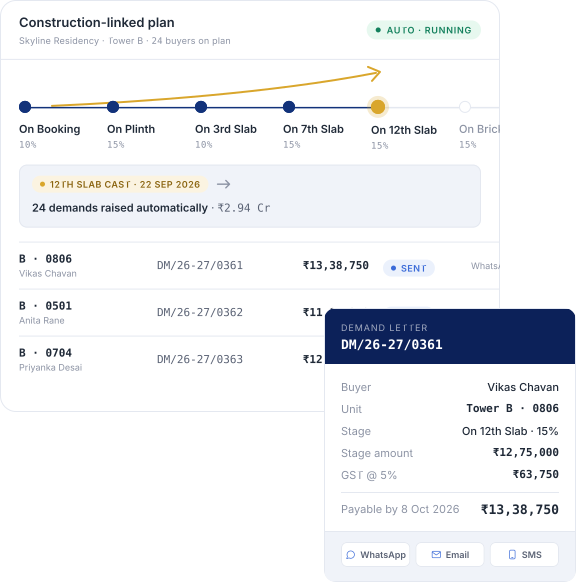
Configure the CLP
Set the construction-linked payment plan for the project once, with its stages, amounts, and due dates.
Step 2
Demands raise and go out
The system generates demands as the plan falls due and sends them by WhatsApp, email, or SMS - one buyer, or a whole project at once.
Step 3
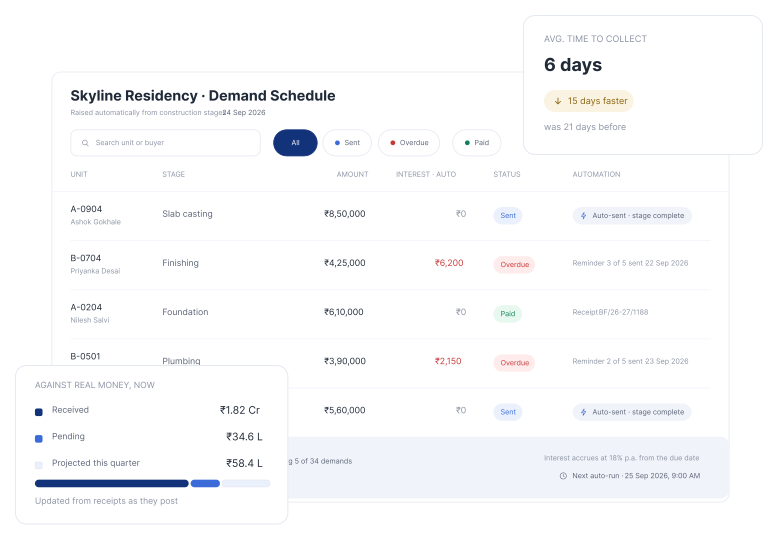
Money arrives and records itself
Payments are receipted, interest calculates on anything overdue, and collection figures update on their own - with no manual entry.
Every buyer, every unit, one place
Find anything in seconds, without asking anyone.
What happens when demands stop waiting
Most builders don't have a collections problem. They have a delay problem that turns into a collections problem.
Money arrives sooner
Demands go out when the stage falls due, not weeks later when somebody finds the time.
Interest stops being written off
Overdue interest calculates on its own, so it gets charged instead of quietly forgiven.
Your team stops chasing
Reminders go out on schedule, so following up isn't the job of whoever happens to be free.
Plan against real money
Received, pending, and projected sit together, so contractor commitments are made against facts.
What is accounts management software for real estate?
It tracks the money buyers owe you after a booking. It raises demands, add interest on late payments, issues receipts, and shows what's paid and what's pending. No more spreadsheets or manual letters.
What is a construction-linked plan, and how does it work here?
A construction-linked plan ties a buyer's payments to stages of construction rather than to fixed calendar dates. In Build Formula, you configure the plan once for a project - its stages, amounts, and due dates - and demands then generate automatically as each stage falls due. You don't rebuild the schedule for every buyer.
Can demand letters be generated and sent for many customers at once?
Yes. Raise a demand for a single buyer in one click, or generate demands for every buyer in a project together. Each one follows the configured CLP and can be sent straight to the buyer over WhatsApp, email, or SMS, or downloaded as a PDF for your records. Sending over WhatsApp matters in practice - an email demand can sit unread for a week, while a WhatsApp message is usually seen the same day.
Is interest on late payments calculated automatically?
Yes. Interest calculates from the demand's due date without anyone working it out by hand. That matters because manually calculated interest is usually the first thing a busy team stops charging - and across a project it adds up to a meaningful sum.
Are payment reminders sent automatically?
Yes. Auto collection setup lets you automate payment schedules and reminders, and reminders reach buyers over WhatsApp, email, or SMS. Buyers get followed up on a schedule rather than whenever someone has a free afternoon, so chasing stops being a person's job.
Can I see received, pending, and projected collections together?
Yes. Financial collection shows all three in real time, filtered by project, period, customer, or status, and presented as graphs where a trend is easier to read than a number. That combination is what makes it possible to commit to contractor payments against facts rather than hope.
How is this different from the Customer Management module?
Customer Management holds the records - who booked which unit, on what terms, with which documents. Accounts handles the money that follows from those bookings: demands, collections, invoices, and receipts. One is the file, the other is the finance.
Can developers outside India use it?
Yes. Real estate teams across India use Build Formula, and we’re expanding across the USA, Canada, and Africa. Every plan includes onboarding, training, and ongoing support.